Skip To Content
  • About Us
  • Our Impact
  • Policies
  • Faculty & Staff
Universities of Wisconsin Universities of Wisconsin

All In Wisconsin

All In Wisconsin

  • About Us
  • Our Impact
  • Policies
  • Faculty & Staff
  1. Universities of Wisconsin
  2. All In Wisconsin
  3. Campus Stories
  4. BenthicNet: How an Aquatic Insect Project Is Revitalizing Biomonitoring in Wisconsin
Campus Stories

BenthicNet: How an Aquatic Insect Project Is Revitalizing Biomonitoring in Wisconsin

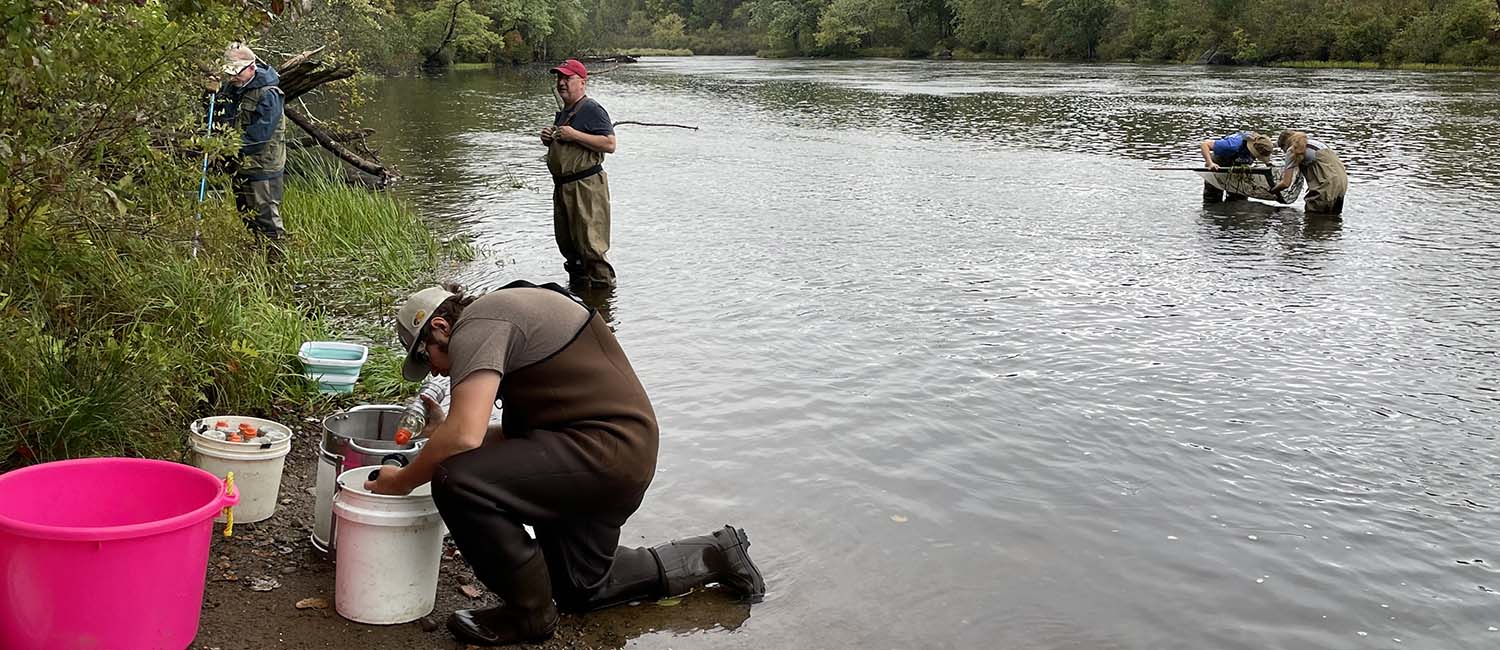
Photo: Students and faculty collect collect aquatic insects at Treehaven during their first on-site training session with BenthicNet.
Students and faculty collect collect aquatic insects at Treehaven during their first on-site training session with BenthicNet. Students and faculty from UW-Parkside, UW-Stevens Point, and UW-Madison created BenthicNet. The training program includes experts from the three universities as well as the Milwaukee Public Museum. They aim to expand access to collections of insects and other invertebrates that are used for biomonitoring, which is a tool for assessing water quality.

Andrew Malacara raves about “Bug Camp,” the informal name for training workshops that are part of a new project funded by the Freshwater Collaborative of Wisconsin.

Malacara is one of six students from UW-Parkside, UW-Stevens Point and UW-Madison who are participating in BenthicNet. The training program includes experts from the three universities as well as the Milwaukee Public Museum. They aim to expand access to collections of insects and other invertebrates that are used for biomonitoring.

Biomonitoring is the practice of analyzing changes in the numbers and types of benthic macroinvertebrates to assess water health/quality. Biomonitoring tools first developed in Wisconsin are now used globally.

Each of the institutions involved has a reference collection of benthic specimens gathered over decades. The collections hold a wealth of historical knowledge that most people, even researchers, aren’t aware exists.

Students collect aquatic insects for biomonitoring database.
Students collect aquatic insects for biomonitoring database. BenthicNet will make the collections more accessible by digitizing the existing collections and expanding them. Students are being trained in collection and preservation techniques. The long-term goal is a resource that allows anyone in the state or the world to access the data. The database will be particularly useful for the Wisconsin Department of Natural Resources and for community science participants. 

Increasing Accessibility to Valuable Resources

Jessica Orlofske, an associate professor at UW-Parkside, envisioned BenthicNet to make the collections more accessible and to train students in collection and preservation techniques. Over the next year, students and faculty will create an online digital database that includes all the collections. The long-term goal is a resource that allows anyone in the state or the world to access the data. The database will be particularly useful for the Wisconsin Department of Natural Resources and for community science participants.

“Regulatory agencies, such as the WDNR, can use the information to designate certain rivers for particular management practices and to prioritize their water quality sampling,” says Orlofske, who leads the project. “We are making the data they collect more informative and accessible, so they can answer questions about long-term trends.”

In addition to digitizing existing collections, students are learning how to collect and preserve new specimens. Throughout the academic year, students will participate in four hands-on weekend training workshops. The first took place at Treehaven, a public nonprofit field station operated by UW-Stevens Point. Additional workshops will take place on the UW-Madison and UW-Stevens Point campuses and at the Milwaukee Public Museum.

Finding Community One Bug at a Time

For Malacara, the experience thus far has been wildly fun and extremely beneficial to his career goals. He is majoring in applied mathematics and general biology and has a keen interest in entomology, the study of bugs.

His goal for the first workshop was to find a stonefly, an aquatic insect not well represented in the current specimen collections. He and Cole Kupsch, a UW-Madison student, found the first of many while surveying the Wisconsin River.

“We were a distance away from everyone, but I screamed at the top of my lungs, ‘We found a stonefly,’ unable to hold my excitement,” Malacara says. He adds that the best part of working with the other campuses has been finding people who share similar interests and passion.

Skylar Johnston, a graduate student from UW-Parkside, agrees. She is interested in museum work and joined BenthicNet to expand her understanding of collecting, identifying and processing aquatic specimens. Connecting with others who share her enthusiasm has been a huge plus.

“I have loved watching everyone become thrilled when they find certain macroinvertebrates in their samples. It was doubly exciting for me to hear everyone else just as excited as I was to find someone new or big in their nets — and even better getting to see the bugs they found,” she says. “I learned so much in just one weekend!”

The first training took place at Treehaven, a
natural resources manager training center
run by UW-Stevens Point.

Training a New Generation

Seeing such enthusiasm about entomology brings Orlofske tremendous joy. She notes that although Wisconsin was once the leader in biomonitoring, many laboratory specialists are nearing retirement age. By training a new generation, Orlofske hopes to contribute to a resurgence of expertise in Wisconsin — and for experts in other parts of the country to once again see Wisconsin as a leader in this type of water quality research.

“Bugs are a gateway to studying other aspects of freshwater. They can lead to jobs that little kids dream of doing, but students often don’t know these are real jobs,” she says. “This work expands their appreciation of careers that involve water or bugs.”

Read more about the students in Student Q&A: BenthicNet

[youtube https://www.youtube.com/watch?v=DWVpa2UtUEk?feature=oembed&w=540&h=960]

Written by Heidi Jeter, Freshwater Collaborative of Wisconsin

Link to original story: https://freshwater.wisconsin.edu/benthicnet-biomonitoring/

Share this

Recents
  • Community Capital: How Credit Unions and Universities Partner to Strengthen Wisconsin January 26, 2026
  • UW-Stout students collaborate across degrees in community project for The Neighbors January 21, 2026
  • UW-Oshkosh partners on $500K grant to reduce barriers to student success in Oshkosh schools January 20, 2026
Recents
Yearly
  • 2026
  • 2025
  • 2024
  • 2023
  • 2022
  • 2021
  • 2020
  • 2019
  • 2018
  • 2017
  • 2016
  • 2015
  • 2014
  • 2013
  • 2012
Monthly
  • January 2026
  • December 2025
  • November 2025
  • October 2025
  • September 2025
  • August 2025
  • July 2025
  • June 2025
  • May 2025
  • April 2025
  • March 2025
  • February 2025
  • January 2025
  • December 2024
  • November 2024
  • October 2024
  • September 2024
  • August 2024
  • July 2024
  • June 2024
  • May 2024
  • April 2024
  • March 2024
  • February 2024
  • January 2024
  • December 2023
  • November 2023
  • October 2023
  • September 2023
  • August 2023
  • July 2023
  • June 2023
  • May 2023
  • April 2023
  • March 2023
  • February 2023
  • January 2023
  • December 2022
  • November 2022
  • October 2022
  • September 2022
  • August 2022
  • July 2022
  • June 2022
  • May 2022
  • April 2022
  • March 2022
  • February 2022
  • January 2022
  • December 2021
  • November 2021
  • October 2021
  • September 2021
  • August 2021
  • July 2021
  • June 2021
  • May 2021
  • April 2021
  • March 2021
  • February 2021
  • January 2021
  • December 2020
  • November 2020
  • October 2020
  • September 2020
  • August 2020
  • July 2020
  • June 2020
  • May 2020
  • April 2020
  • March 2020
  • February 2020
  • January 2020
  • December 2019
  • November 2019
  • October 2019
  • September 2019
  • August 2019
  • July 2019
  • June 2019
  • May 2019
  • April 2019
  • March 2019
  • February 2019
  • January 2019
  • December 2018
  • November 2018
  • October 2018
  • September 2018
  • August 2018
  • July 2018
  • June 2018
  • May 2018
  • April 2018
  • March 2018
  • February 2018
  • January 2018
  • December 2017
  • November 2017
  • October 2017
  • September 2017
  • August 2017
  • July 2017
  • June 2017
  • May 2017
  • April 2017
  • March 2017
  • February 2017
  • January 2017
  • December 2016
  • November 2016
  • October 2016
  • September 2016
  • August 2016
  • July 2016
  • June 2016
  • May 2016
  • April 2016
  • March 2016
  • February 2016
  • January 2016
  • December 2015
  • November 2015
  • October 2015
  • September 2015
  • August 2015
  • July 2015
  • June 2015
  • May 2015
  • April 2015
  • March 2015
  • February 2015
  • January 2015
  • December 2014
  • November 2014
  • October 2014
  • September 2014
  • July 2014
  • June 2014
  • May 2014
  • April 2014
  • March 2014
  • January 2014
  • December 2013
  • November 2013
  • October 2013
  • September 2013
  • August 2013
  • July 2013
  • June 2013
  • May 2013
  • April 2013
  • March 2013
  • February 2013
  • January 2013
  • December 2012
  • November 2012
  • October 2012
Universities
  • Freshwater Collaborative of Wisconsin
  • Universities of Wisconsin
  • UW Colleges
  • UW Extended Campus
  • UW-Eau Claire
  • UW-Extension
  • UW-Green Bay
  • UW-La Crosse
  • UW-Madison
  • UW-Milwaukee
  • UW-Oshkosh
  • UW-Parkside
  • UW-Platteville
  • UW-Platteville; UW-La Crosse
  • UW-River Falls
  • UW-Stevens Point
  • UW-Stout
  • UW-Superior
  • UW-Whitewater
Categories
  • Community
  • Economic Development
  • Research & Innovation

Related Articles

  • Photo: Madelyn Pretzer, Tanner Schauf, Brandy Wolf and Erika Rivolta build a tool bench for The Neighbors.

    Construction, interior design, technology education majors build garden products for senior living home residents In a cross-disciplinary collaboration, four groups of students in Lecturer James Bunkelman’s Light Construction Methods class are designing and building two raised garden beds, one raised tool bench and one raised tool holder for a senior living home. The project is part…

    January 21, 2026

    UW-Stout students collaborate across degrees in community project for The Neighbors

  • Photo: Students at Read Elementary School, Oshkosh, spend time together outdoors. Read Elementary is one of two schools participating in a three-year, $500,000 Community Schools initiative led in partnership with UW-Oshkosh, Winnebago County Public Health and the Oshkosh Area School District. (Photo courtesy Read Elementary)

    A $500,000 award from the Wisconsin Partnership Program is fueling a major new effort led in part by the University of Wisconsin-Oshkosh to prevent childhood trauma and strengthen family wellbeing in Winnebago County.  The three-year initiative, launched in partnership with Winnebago County Public Health and the Oshkosh Area School District, will embed community health workers…

    January 20, 2026

    UW-Oshkosh partners on $500K grant to reduce barriers to student success in Oshkosh schools

  • Photo of UW-Platteville students collecting stream monitoring data.

    Farming is a vital part of Wisconsin’s economy, and agricultural practices significantly impact the state’s water resources. The Ag-Water Nexus Seminar and Ag-Water Nexus Field Experience equip students with a broad, interdisciplinary education that integrates agricultural and environmental perspectives. The courses rotate among four universities, allowing students to explore different agricultural areas in Wisconsin. The…

    January 16, 2026

    UW-Platteville spring course explores the connection between agriculture and water in Wisconsin

Universities of Wisconsin
Office of Public Affairs, Communications, and Branding
Madison, WI 53706

universityrelations@wisconsin.edu

  • Employee Intranet

© 2026 Board of Regents - University of Wisconsin System. All Rights Reserved

  • Accessibility Statement
  • Privacy Policy